

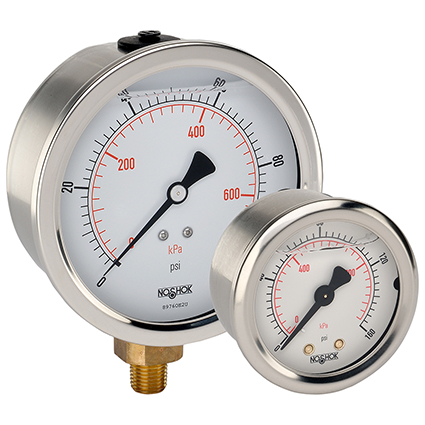
Pressure gauges are used across a range of industrial applications to monitor and provide real-time measurement of air, hydraulic fluid, gas, water, or steam pressure. They are a critical component for monitoring system operation and to provide operators with an immediate visual alert when pressures drop too low or reach dangerously high levels.
Hydraulic pressure gauges are available in analog and digital formats, each with its own benefits. Analog gauges do not require a power source, are easy to use, work in low- and high-pressure applications, and are generally inexpensive. Digital gauges can be faster and easier to read, but they require a power source and are best for low-pressure applications. For industrial applications, we recommend analog gauges.
Maintaining optimal system performance and workplace safety depends on selecting the correct gauge size and style for your application. In this blog, we cover the essential factors you should consider when choosing a hydraulic pressure gauge for your machine.
1. Pressure Rating and Range
The most important rule in pressure gauge sizing and selection is to ensure safe, accurate measurement of system pressure, during both normal operation and when there are system pressure spikes.
In general, gauges should have a maximum psi that exceeds the upper limit of your system pressure range to ensure safe and accurate measurement. ASME B40.100 Pressure Gauges and Gauge Attachments standards recommend a maximum psi that is twice (2x) your system’s optimal operating pressure. For applications involving vibration and pulsation, the maximum operating system pressure should not exceed half (50%) of the gauge’s full range.
2. Gauge Diameter/Dial Size
Readability is the primary factor in selecting a gauge diameter, though space constraints are another consideration. Gauges located far from machine operators and technicians, and those mounted in hard-to-reach areas, will require larger gauges for better visibility.
Systems requiring higher accuracy will also require a larger gauge. Size options vary by manufacturer, but typically range from 1-½” to several inches.
3. Mounting Location
Where and how you plan to mount the gauge on your machine dictates the style you need. Mounting options can vary by manufacturer, but typically include:
- Bottom/lower mount
- Center back mount
- Lower back mount
- Panel/front flange mount
4. System Compatibility
Numerous system variables can affect gauge performance and accuracy. When researching options, consider not only system pressure but potential exposure to excessive temperatures, water, humidity, corrosive media, and shock or vibration.
For case material, stainless steel and brass are the two most common options available. Brass is best for industrial applications where moisture and corrosion are not a concern. For extreme operating environments involving moisture, high temperatures, or hydraulic fluid and other corrosive process media, we recommend stainless steel.
5. Fill Media
Analog pressure gauges either have a dry (air) fill or a liquid fill (glycerine or glycerine/water. Rugged industrial applications or those involving high vibration should use liquid-filled gauges to minimize pointer flutter and protect the gauge from pressure spikes.
The factors mentioned above will help you select hydraulic pressure gauges in the correct size, material, and mounting configuration for your application. There are many types of gauges on the market, and each provides different benefits. If you need help sizing a pressure gauge for your application, our technical team is here to help!
We offer a broad range of pressure gauges and accessories from premier fluid power manufacturers and can help you size hydraulic instrumentation and components for your entire hydraulic system. Call us today to discuss options.